
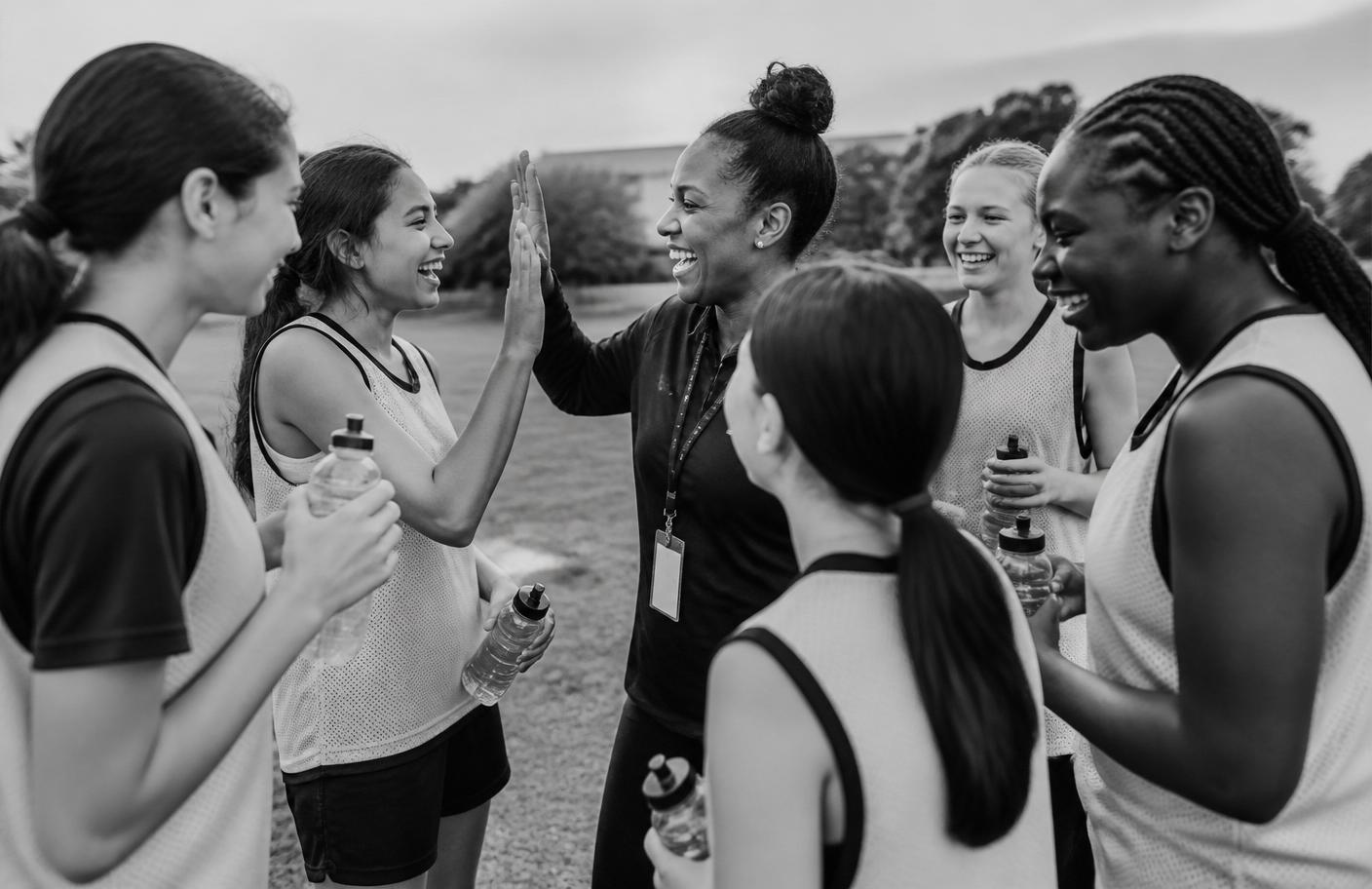
Growth plate injuries in young athletes.
Growing bones have a weak link adults don’t — and most season-ending injuries in 10–14 year olds run through it. What growth plates are, where they get hurt, and how smart training load protects them.
Female Evidence Standard
Our citation rule: studies must include verified female participants. Male-only studies are excluded.
Read our evidence-selection policyWhat every parent should understand
The biology is simple: until the plate fuses, it absorbs forces that ligaments and bone would otherwise take.
What a growth plate is
The soft zone of developing cartilage near the ends of long bones where growth happens. Until it fuses — mid-teens for most girls — it is weaker than the surrounding ligaments and bone.
Why the same fall hurts kids differently
In an adult, a twisted wrist might sprain a ligament. In a growing athlete, the same force often goes through the growth plate instead — it is the weakest link in the chain.
Where they show up most
Wrist (gymnastics, falls), elbow and shoulder (throwing sports), knee (running and jumping sports), and heel (Sever's disease in soccer and track).
Why they get missed
Growth plate fractures can look normal on an initial X-ray, and overuse injuries to the plate build gradually. Pain at the end of a growing bone in a 10–14 year old deserves respect, not ice and persistence.
Six rules that protect growing athletes
None of these require equipment. All of them require an adult willing to enforce them.
Cap the weekly load
Hours per week ≤ her ageA widely used rule of thumb from sports medicine: a young athlete's organized sport hours per week should not exceed her age in years. Load beyond that tracks with overuse injury.
One rest day, every week
Minimum, no exceptionsGrowth plates adapt to stress during recovery, not during training. A week without a full rest day is a week without adaptation.
Delay single-sport specialization
Multi-sport through age 14+Sports specialization recommendations and the American Academy of Pediatrics both link early single-sport specialization to higher overuse injury and burnout rates.
Ramp volume gradually
No sudden spikesGrowth plates tolerate progressive loading well and spikes badly. Doubling practice volume in a week — a new season, a showcase, a camp — is the classic trigger.
Fuel the growth
3 meals + snacks, every dayUnder-fueled athletes build weaker bone during the exact years bone is being built. Bone stress and energy availability are inseparable — see the female athlete triad guide.
Treat growth-spurt pain as data
Modify, don't push throughDuring peak growth velocity the plate is at its most vulnerable and coordination temporarily lags. This is the window to trim jump and throw volume, not add it.
When to stop and call a clinician
Growing athletes rarely complain. These are the signals that matter.
Pain at a bone's end
Pain localized at the wrist, heel, knee, or elbow — not in the muscle belly — in a growing athlete. Muscle soreness fades in days; growth plate pain persists.
A limp or changed technique
Favoring a leg, shortening a stride, or altering a throwing motion. Athletes protect a painful growth plate before they ever complain about it.
Pain that changes sleep
Night pain or pain at rest is never growing pains in an athlete. It warrants a sports medicine evaluation promptly.
Swelling after a specific incident
A fall or twist followed by point tenderness over a growth plate is a fracture until proven otherwise — even with a normal first X-ray.
What matters at her age
The same sport asks different things of an eight-year-old and a sixteen-year-old. Slide through the ages.
What matters at her age
Slide through the ages to see what changes — and what to watch for — as she grows.
Ages 11–13
The growth spurt: bones lengthen faster than muscle adapts
Watch for
- Sever's heel pain and Osgood-Schlatter knee pain peak here
- Sudden loss of flexibility and clumsier landings
- Overuse in the throwing arm or the jumping leg
Training focus
- Neuromuscular warm-up two to three times a week, every week
- Hip, hamstring, and calf strength to catch up with new limb length
- Cap weekly hours near her age in years; keep one full rest day
Red flags
- Pain at the knee or heel that changes how she runs
- Swelling around a joint after a single incident
- Pain that keeps her out of the second half, week after week
Build your appointment question list
Tick what fits your athlete, then copy or print the list before you see the clinician.
Questions to ask at your appointment
Tick the ones that fit your athlete, then copy or print the list and bring it with you.
About the diagnosis
About training right now
About getting back
About growth and health
Frequently asked
What are the symptoms of a growth plate injury?
Persistent pain near the end of a long bone (wrist, heel, knee, elbow, shoulder), tenderness to direct pressure, swelling after a specific fall or twist, and a limp or technique change. Unlike muscle soreness, it does not fade after a few days of rest.
Are growth plate injuries serious?
Most heal completely with rest and modified activity, but physeal injuries in youth sports deserve real respect: a subset can disturb future bone growth if the athlete keeps loading through them. Early evaluation is what keeps a minor injury minor.
What is Sever's disease?
Heel pain from irritation of the growth plate where the Achilles tendon attaches, common in 8–14 year olds in running and jumping sports. It resolves with load modification, calf flexibility work, and heel cushioning — not with playing through it.
Does strength training stunt growth?
No. The myth comes from case reports of growth plate fractures from maximal lifts and dropped weights — supervision problems, not strength training itself. The 2014 international consensus on youth resistance training found supervised, age-appropriate strength work safe and beneficial for growing athletes.
When can she return after a growth plate injury?
When her clinician clears her — based on symptom resolution and, for fractures, imaging. Returning on a calendar instead of a clearance is how a six-week injury becomes a six-month one.
A note on scope. G-MIP is an education-first initiative, not a medical provider. This page covers prevention and recognition of and problems, and the that lowers the risk. Any athlete with persistent pain near a growing bone should be evaluated by her own clinician before returning to full training.
Where to go next
Every claim, sourced
6 peer-reviewed sources. Each links to its PubMed record so you can read the original.
- 1
Caine D, DiFiori J, Maffulli N. Physeal injuries in children's and youth sports: reasons for concern? Br J Sports Med. 2006;40(9):749-760.
PubMed 16807307 - 2
Lloyd RS, Faigenbaum AD, Stone MH, et al. Position statement on youth resistance training: the 2014 International Consensus. Br J Sports Med. 2014;48(7):498-505.
PubMed 24055781 - 3
Behm DG, Faigenbaum AD, Falk B, Klentrou P. Canadian Society for Exercise Physiology position paper: resistance training in children and adolescents. Appl Physiol Nutr Metab. 2008;33(3):547-561.
PubMed 18461111 - 4
Jayanthi N, Pinkham C, Dugas L, Patrick B, LaBella C. Sports specialization in young athletes: evidence-based recommendations. Sports Health. 2013;5(3):251-257.
PubMed 24427397 - 5
Brenner JS; American Academy of Pediatrics Council on Sports Medicine and Fitness. Sports specialization and intensive training in young athletes. Pediatrics. 2016;138(3):e20162148.
PubMed 27573090 - 6
Gabbett TJ. The training—injury prevention paradox: should athletes be training smarter and harder? Br J Sports Med. 2016;50(5):273-280.
PubMed 26758673